

The spark of private rocket companies is beginning to spread.
At the beginning of the month, two significant events occurred in China's private rocket industry, resulting in mixed outcomes: Deep Blue Aerospace's "Xingyun-M" successfully completed a one-kilometer vertical takeoff and landing (VTVL) flight test; while Starry Sky Glory's "Hyperbola-1" remote-four carrier rocket launch failed.
Rockets are the gateway to space and an insurmountable foundation for developing a space economy. Since the National Development and Reform Commission, the Ministry of Finance, and the State Administration of Science, Technology and Industry for National Defence jointly issued the "National Civil Space Infrastructure Long-Term Development Plan (2015-2025)" in 2015, domestic private rocket companies have rapidly developed for seven years. What companies in this sector are worth paying attention to, and what is the level of their technological progress?
This article was published by 36Kr on China's Space Day (April 24th) this year. The article reviews companies in China's private rocket industry. Through this article, we can gain insight into the development status of China's private rocket companies. Below, enjoy:


Source | 36Kr
Article | Zhang Lin
Image Source | pexels
On April 24, 2022, China celebrated its seventh Space Day, a commemorative day established to celebrate the achievements of China's space program and carry forward the spirit of Chinese aerospace, carrying the national aerospace sentiment.
Since the successful launch of China's first artificial satellite, "Dongfanghong-1," on April 24, 1970, China has conducted hundreds of space launches in the more than 50 years that followed,In 2021 alone, China completed 55 space launches,ranking first in the world.The names of carrier rockets and spacecraft such as "Long March" and "Shenzhou" are familiar even to ordinary people, demonstrating the strength of China's space capabilities.
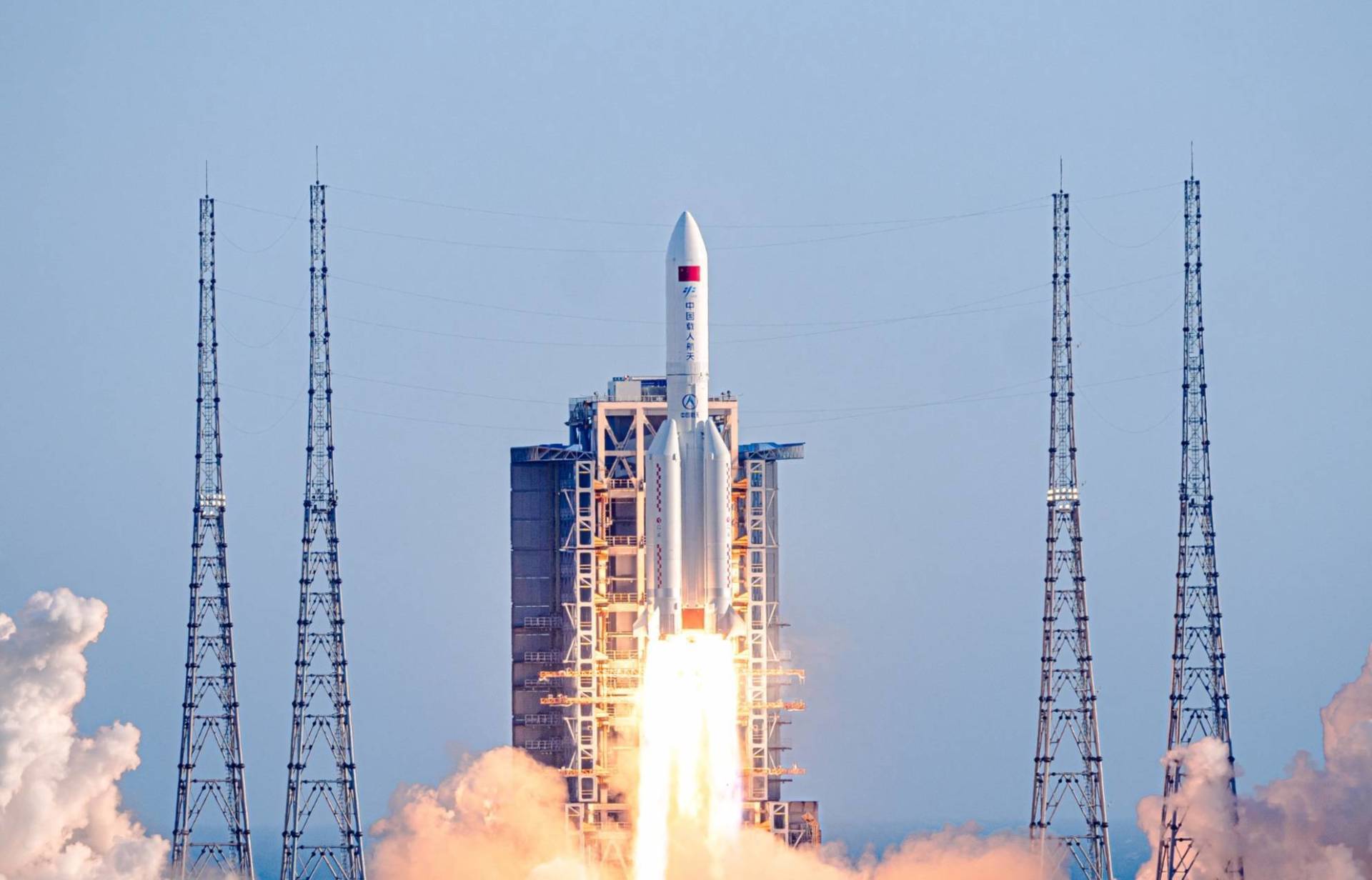 Long March 5 carrier rocket launch
In addition to the national team represented by the China Aerospace Science and Technology Corporation and the China Aerospace Science and Industry Corporation, China's private rocket companies have also grown rapidly in recent years, achieving remarkable results such as "continuous success" and "multiple satellites launched on one rocket".
01 Emergence of Rocket Companies
The Chinese private rocket market exploded in 2015Previously, most people believed that aerospace and rocket launches were exclusively state activities. This perception stemmed from two main factors: firstly, satellite and rocket launches, even manned spaceflights, demand extremely high technical capabilities. Even globally, only a handful of countries can independently master aerospace technology and achieve corresponding results.
Secondly, aerospace activities, especially rocket launches, are extremely expensiveIf a launch fails, hundreds of millions of yuan could be lost, a risk that most private enterprises cannot bear.
However, with market development, and especially after SpaceX demonstrated that technical means could significantly reduce rocket launch costs, this directly fueled more diverse aerospace demands and business models.
This trend of connecting aerospace technology with daily life has led China to promote the development of its commercial space industry. In November 2014, the State Council issued Document No. 60, which explicitly stated:"Encourage private capital to research, launch, and operate commercial remote sensing satellites, providing market-oriented and professional services."Since then, policies, capital, and the market have supported private rocket companies, leading to their emergence in China.
Blue Arrow Space
Founded in 2015, Blue Arrow Space is one of the earliest established private aerospace companies in China,and the first company to attempt an orbital launch. In October 2018, Blue Arrow Space launched the Zhuque-1 small solid-propellant carrier rocket in Jiuquan, but unfortunately, the rocket experienced an anomaly in the final flight phase and failed to place the satellite into its intended orbit.
Blue Arrow Space's main product is currently the Zhuque-2 medium-sized liquid oxygen-methane carrier rocket, capable of sending a payload of up to 6 tons into near-Earth orbit. In terms of engines, Blue Arrow Space possesses the "Tianque TQ-11" 10-ton liquid oxygen-methane engine and the "Tianque TQ-12" 80-ton liquid oxygen-methane engine. The "Tianque TQ-11" engine completed a new round of ignition tests last year, with a single test exceeding 10,000 seconds.
In September 2020, Blue Arrow Space completed a C+ round of financing of 1.2 billion yuan, bringing its total financing to nearly 2.6 billion yuan, ranking first among domestic private aerospace companies.
Starry Sky Glory
Established in 2016, Starry Sky Glory is also a first-tier private rocket company in China.On July 25, 2019, Starry Sky Glory's Hyperbola-1 "Remote-1 Chang'an Oushan" carrier rocket was successfully launched from the Jiuquan Satellite Launch Center in China, precisely delivering multiple satellites and payloads into the planned 300-kilometer circular orbit. This was China's first successfully launched private rocket to deliver payloads into their planned orbit.
In terms of engines, Starry Sky Glory mainly has the "Focus-1" and "Focus-2 (under development)" liquid oxygen-methane engines. Starry Sky Glory's current focus is on the Hyperbola-2 reusable small liquid oxygen-methane carrier rocket equipped with "Focus-1." This rocket has a low-Earth orbit carrying capacity of 1.9 tons. On December 25, 2019, Starry Sky Glory's Focus-1 reusable liquid oxygen-methane engine completed a successful 500-second full-system long-duration test.
In August 2020, Interstellar Glory completed a Series B financing round of nearly 1.2 billion RMB, led by Beijing Financial Street Capital Operation Center, setting a record for the highest single-round financing in China's commercial aerospace industry at the time.
Starry River Power
Starry River Power was established in 2018. Its rocket products include the "Guishenxing" series of small solid-propellant launch vehicles and the "Zhishenxing" series of medium-sized reusable liquid launch vehicles.In November 2020, Starry River Power successfully launched the Guishenxing No. 1 small solid-propellant launch vehicle.
On December 7, 2021, Starry River Power successfully launched the Guishenxing No. 1 (Remote Second) Ping An Bank Digital Pocket Number carrier rocket at the Jiuquan Satellite Launch Center, successfully sending five commercial satellites into a 500km sun-synchronous orbit. This launch achieved the first consecutive successful launch and the first multi-satellite commercial launch breakthrough for a private Chinese rocket.
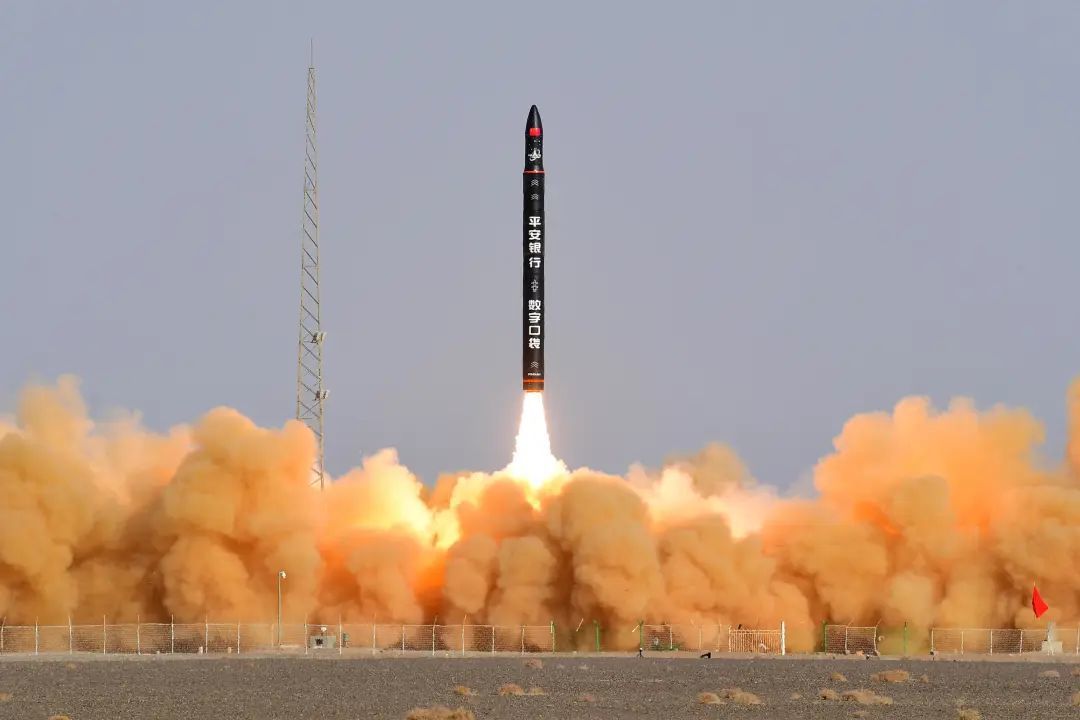 Starry River Power Guishenxing No. 1 (Remote Second) Ping An Bank Digital Pocket Number carrier rocket (Source: Starry River Power official website)
Deep Blue Aerospace was established in 2017, focusing on liquid reusable launch vehicles.Deep Blue Aerospace is headquartered in Nantong, Jiangsu Province, and is currently the only private rocket company in China to have completed a 100-meter-level liquid launch vehicle recovery test.。
In July 2021, Deep Blue Aerospace completed its first vertical takeoff and vertical landing (VTVL) free flight, also known as the "Grasshopper Jump" vertical recovery flight test of a launch vehicle. On October 13, 2021, Deep Blue Aerospace successfully completed another 100-meter-level VTVL vertical recovery test, and will conduct a kilometer-level high-altitude vertical takeoff and landing recovery flight test of the "Xingyun-M" test rocket as planned.
Deep Blue Aerospace's 100-meter-level rocket recovery test
Jiu Zhou Yun Jian
Jiu Zhou Yun Jian was established in 2017, and its products also focus on liquid rocket engines.Its main engines are two models: the LY-10 "Lingyun" 10-ton liquid oxygen methane engine and the LY-70 "Longyun" 80-ton liquid oxygen methane engine. In March 2021, Jiu Zhou Yun Jian successfully completed the semi-system test of the LY-70 "Longyun" 80-ton liquid oxygen methane engine.
At the beginning of this year,Jiu Zhou Yun Jian completed a new round of financing exceeding 100 million yuan, with investors including Xintou Huaying and Pufeng Venture Capital, while existing shareholders Yunhe Capital and Zhongguancun Qihang Investment continued to invest.It is reported that the funds will be used to accelerate the company's verification and iteration of liquid oxygen methane reusable power technology, and the construction of the company's integrated integration capabilities.
Tianbing Technology
Tianbing Technology was established in 2015 and is committed to independently developing the next generation of room-temperature green liquid propellants and minimalist aerospace propulsion systems.Tianbing Technology mainly develops a rocket fuel called HCP and related engines. According to Tianbing Technology's patents and other information, this fuel should be a nitrous oxide-based premixed fuel. At the same time, Tianbing Technology also developed a liquid oxygen kerosene rocket engine.
In 2021, Tianbing Technology's 30-ton thrust HCP rocket engine "Tianhuo No. 3" and 30-ton liquid oxygen kerosene engine "Tianhuo-11" successfully completed multiple full-system hot firings.
In February 2022, Tianbing Technology announced the completion of a major strategic B round of financing,This round of financing was led by CICC Capital, with participation from China Development Bank International, CITIC Securities Investment, Hongfu Assets, Tongtai Capital, Dongwu Venture Capital, and existing shareholders Zhangjiagang Ecological Science and Technology City and Jundu Investment. It is reported that the funds will be used for the maiden flight of liquid oxygen kerosene launch vehicles and subsequent batch production preparation.
Oriental Space was established in 2020 and has maintained rapid development since its inception. In early 2021, Oriental Space completed the demonstration of the Gravity-1 solid-propellant clustered medium-sized launch vehicle, and in November-December 2021, it passed the subsystem and overall scheme preliminary sample stage review and officially entered the preliminary sample development stage.This is the first clustered rocket under development by a Chinese commercial aerospace company.
In January this year, Oriental Space announced the completion of a Pre-A round of financing of nearly 300 million RMB,led by Huayu Capital, with participation from Yunjiu Capital, Qiji Chuantang, Xifeng Changqing, Huilong Venture Capital, Dinghe Gaoda, and Yihe Capital. To date, Oriental Space has received a total of nearly 700 million RMB in financing. Previously, Lenovo Star had participated in a series of angel round financing for Oriental Space.
Rocket Party
Rocket Pie was founded in December 2020 by Cheng Wei, chairman of Beijing Darwin Cell Biotechnology Co., Ltd., with co-founder Zhuang Fengyuan as an academician of the International Academy of Astronautics. Rocket Pie's R&D center is located in Beijing, and its assembly and manufacturing base is located in Huzhou, Zhejiang. According to Rocket Pie, the company isa new commercial aerospace company based on the development of the "geo-lunar space economy" and guided by deep space exploration in the future.
In March 2021, Rocket Pie released the technical indicators of its first liquid carrier rocket, "Darwin No. 1": total length 24.1 meters, diameter 2.25 meters, launch weight 42.52 tons, and launch thrust 500kN. It is expected that the rocket will use 5 10-ton liquid oxygen methane engines in the first stage and the first 10-ton vacuum plate liquid oxygen methane engine in the second stage.
In terms of financing,in December 2021, Rocket Pie completed tens of millions of yuan in angel plus round financing, led by Hainan Qianyi Fund.
02 Technological Growth
SpaceX has proven thatliquid fuel rocket engines are the key to reusable rocket technology and the most effective way to reduce rocket launch costs at present.
Regardless of whether the rockets currently owned or successfully launched by China's private rocket companies are liquid fuel rockets, each company is actively developing liquid fuel engines.
Fundamentally, the reduction in rocket launch costs caused by liquid fuel engines is the basis for rocket companies to undertake a large number of commercial and even government aerospace orders. At the same time, this will also give rise to a new aerospace pattern and aerospace resource allocation. Without cheap rockets and ultra-low transportation costs, new space economic industries such as satellite communication networks, space biopharmaceuticals, and space breeding cannot be deployed.
However, the fact remains that the research and development of liquid fuel rocket engines is technically difficult. For example, in terms of fuel selection, the technical paths of liquid oxygen kerosene and liquid oxygen methane are different, each with its own advantages and disadvantages.
The specific impulse of a liquid oxygen kerosene engine is only slightly lower than that of a liquid oxygen methane engine, while the engine has a higher price-performance ratio and relatively mature research and development technology. Starry Sky Power, Deep Blue Aerospace, and other private rocket companies that have achieved excellent results are developing liquid oxygen kerosene engines and corresponding rockets.
For example, in March of this year, Starry Sky Power's "Sky" 50-ton reusable liquid oxygen kerosene engine successfully completed a full-system test. During the test, the "Sky" engine started according to the predetermined procedure, ignition, start-up, and staging were normal, all components worked normally, combustion was stable, the nozzle outlet flame was bright, the main parameters were consistent with the adjusted calculated values, shut down according to the procedure, and the product was intact after the test.
Deep Blue Aerospace's 5-ton liquid oxygen kerosene engine "Thunder-5" has supported multiple "grasshopper jump" flight recovery tests of the "Nebula-M" test rocket, and countless test runs have been conducted.
In contrast, liquid oxygen methane engines require more experimental preparation and engineering verification. However, the advantages of liquid oxygen methane engines, such as the fact that combustion is not prone to coking, methane is easy to prepare, and space resources are abundant, have also made them favored by many private rocket companies, including SpaceX. SpaceX's Falcon engine is even called the "engine of the future".
Among China's private rocket companies, Blue Arrow Aerospace and Galactic Glory are the main players in the development of liquid oxygen methane engines. Blue Arrow Aerospace's 80-ton liquid oxygen methane rocket engine "Tianque TQ-12" ground-based engine has a sea-level thrust of 67 tons, and the vacuum-type engine has a vacuum thrust of 80 tons. This also makes it the third largest thrust liquid oxygen methane engine in the world.
In addition to fuel selection, China's private rocket companies have also made considerable technological breakthroughs in key engine components and overall structure. For example, in terms of engine fuel injection, the needle-plug injection technology has been mastered by several companies, including Blue Arrow Aerospace, Starry Sky Power, and Deep Blue Aerospace.
The advantages of this injection technology are good atomization performance, high combustion efficiency, and stable combustion, which can achieve a large-scale thrust adjustment and can be throttled to 5%~10% of the maximum thrust. Also, the structure is simple. However, the design of the needle-plug injector needs to consider the properties of the propellant, the mixing ratio, the flow required for the combustion chamber wall cooling, and the feasibility of processing and manufacturing. The design is very difficult.
Publicly available information shows that Blue Arrow Aerospace completed the hot test verification of liquid oxygen methane needle-plug injectors in 2020, and Starry Sky Power's "Sky" engine and Deep Blue Aerospace's "Thunder-5" also use needle-plug injection technology.
In the fields of materials, rocket control, engine 3D printing, etc., China's private rocket companies have also made great progress, especially in 3D printing. The advantages of reducing costs and reducing the structural complexity of rocket engines have begun to be valued and applied by many companies.
Admittedly, our private rocket companies still have a certain distance from SpaceX in terms of technology, but from a macro perspective, China has given private rocket companies a huge impetus, both in terms of policy and market.
In April 2020, China included satellite internet in the "new infrastructure" and proposed several low-orbit constellation plans. Some people predict that in the next 7 or 8 years, China will need to launch more than 10,000 additional satellites.
In terms of the market, there is currently a shortage of rocket capacity in China,the situation of "many stars, few rockets" has existed for a long time, coupled with the development needs of China's commercial satellites, the future demand will further expand.This is a golden opportunity for private rocket companies.
